
Exploring Types of Prosthetic Limbs
At Prosthetic Orthotic Solutions International (POSI), we believe that losing a limb doesn’t mean losing your potential. Prosthetic limbs have evolved dramatically, offering individuals the chance to reclaim mobility, independence, and confidence. Whether due to injury, illness, or a congenital condition, POSI’s team has years of experience in fitting all levels of prosthetic devices..
Understanding the various types of prosthetic limbs available today is the first step toward finding the right fit for your lifestyle. Let’s dive into the world of prosthetics, explore the options, and see how POSI can guide you on this journey.

What Are Prosthetic Limbs?
Prosthetic limbs are artificial devices designed to replace missing arms, legs, hands, or feet. Far more than just replacements, they’re tools that restore function, enhance appearance, and adapt to individual needs. From basic designs to cutting-edge technology, these devices cater to a wide range of goals—whether that’s walking to the mailbox, running a marathon, or playing an instrument. At POSI, our mission is to match each person with a prosthetic that aligns with their daily activities, physical abilities, and aspirations.
Prosthetics falls into two categories, Upper Extremity and Lower Extremity. Within these, there are specific types based on the level of amputation and desired functionality. Here is the breakdown.
Upper Extremity Prosthetics
An upper extremity prosthesis is an artificial device designed to replace the missing function of the anatomy after physical loss or amputation. These devices can focus on restoring visual symmetry, along with grasp and item stability through restored movements. The types of upper extremity prosthetic designs range from digits up to the shoulder level. The interface with the skin is commonly called a socket and is important to be properly fitting to maintain comfort and provide bio mechanical control. The socket design will play a large role in “suspending” or keeping the prosthesis on during use. Below are the common types and considerations.
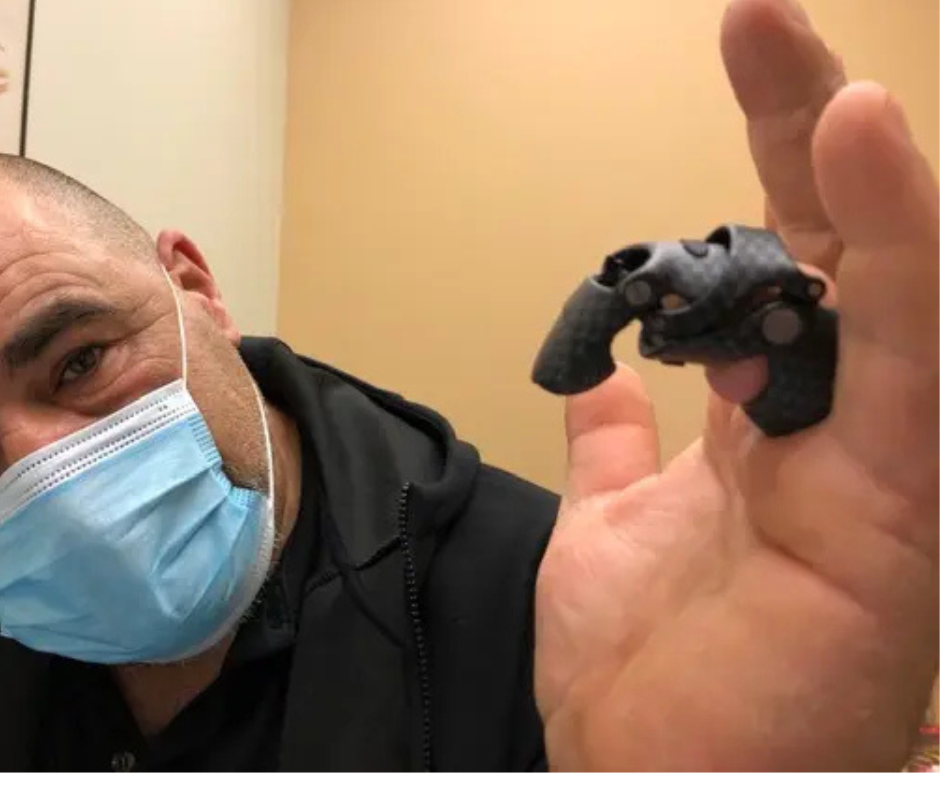
- Finger and Partial Hand Prosthetics
These are designed for individuals that may have a single, or multiple missing digits. It is not uncommon to have additional areas of the hand injured or affected as well that needs to be evaluated. The options for finger and hand prosthetics can include custom made silicone restorations, these do serve light functional needs with more of a bias to visual symmetry. For increased strength requirements, such as vocational demands, there are mechanical designs ranging from passive to myo-electric to replicate the grasp of fingers for item stability. Here at POSI, we have a team that is experienced in providing you with an education of your options, as well as, state of the art in-house fabrication for your needs. Once your prosthesis has been provided, therapy training will be of utmost importance to get and learn the most value from your prosthesis.
- Trans-radial Prosthetics
This level of prosthetic design is designated for individuals with limb loss through the forearm with the elbow remaining. The socket designs for this level must take into account the presentation of the remaining limb, the range of motion, and intended use of the prosthesis. Prosthetic hands and hooks are considered to be “terminal devices”. These devices can be of simple aesthetic nature that are lightweight, or more technologically advanced microprocessor designs. These designs are commonly referred to as “body powered” and “myo-electric”. The prosthetic design that is “best” is the one that is comfortable and provides the functional requirements to support your independent living such as meal preparation and dressing. This will look different for each individual and their lifestyle to regain independence. The underlying foundation is that the prosthesis needs to fit properly for best comfort and control regardless of the design criteria. Once your prosthesis has been provided therapy training will be of utmost importance to get and learn the most value from your prosthesis.
- Trans-humeral Prosthesis
This level of prosthetic design is designated for individuals with limb loss above the elbow. The prosthetic design at this level will typically require a mechanical elbow that might be a passive, body powered, or myo-electric design. Its primary function is to allow for best hand positioning for assistance of the other hand. The design and selected components need careful consideration to ensure the maximum value of functional return. Passive system will typically be of the least weight while providing body symmetry to support clothing and provide light opposition. A body powered system can still be relatively lightweight while providing an increase in functions when compared to passive designs. These are robust and durable for a wide variety of environments. A myo-electric prosthesis can provide a larger list of functions that will closely replicate the human arm and hand with a bit more weight and sophistication to be considered. The best design will be the one that can provide the comfort and functions to restore your independent living. Once your prosthesis has been provided therapy training will be of utmost importance to get and learn the most value from your prosthesis.
Types of Prosthetic limbs- Upper Extremity
- Passive Prosthetics
Passive limb prostheses prioritize aesthetics over movement, they’re lightweight, and can help with self confidence while out in the community. POSI offers custom cosmetic finishes to match your skin tone and style.
- Body-Powered Prosthetics
Body powered prostheses use your own muscle power, often via cables and harnesses to operate. They are durable, low-maintenance, and give you direct control.
- Myoelectric Prosthetics
Myo-electric limbs use sensors to detect muscle signals, translating them into actions like grasping or bending, they offer precision and strength.
Types of Prosthetic Limbs- Lower Extremity
Lower limb prosthetics focus on mobility and stability, they are engineered so an individual will have the confidence to walk and get back to their pre-amputation quality of life. Below are the common types and considerations.
- Transtibial Prosthetics
This level of prosthesis is designed for individuals with an amputation below the knee. The prosthesis consists of a prosthetic liner for the suspension, socket and prosthetic foot. There are different methods of suspension (this is how the prosthetic socket stays on) and different types of prosthetic feet. Many factors are taken into consideration, when the prosthetist and individual work together to determine the best components for each individual. POSI manufactures transtibial prosthetics in house with durable materials and components, ensuring users can walk comfortably and confidently.
- Transfemoral Prosthetics
A transfemoral prosthetic is for one with an amputation above the knee. The prosthesis consists of a prosthetic liner or direct contact for the suspension, a socket, a prosthetic knee and foot. The type of suspension (this is how the prosthetic socket stays on), and the prosthetic knee and foot will vary from individual to individual. The prosthetist and individual together will determine which suspension, knee and foot will be best for them. At POSI, we offer our patients the opportunity to try different feet and knees so the prosthetic is custom to each individual’s needs and activity level.
Why Customization Matters
No two people are alike, and neither are their prosthetics, that is why at POSI we hand cast for all prosthetic sockets to be sure the residual limb is captured appropriately for an intimate fit. We consider the amputation level, lifestyle and activity goals to help manufacture the best prosthesis for an individual. The prosthesis is then manufactured in house so fine details and adjustments can always be completed during an appointment. A properly fitting customized prosthetic socket will lead to a successful prosthetic wearer and allow one to get back to living life.
POSI’s Role in Your Prosthetic Journey
The prosthetic journey can be scary and confusing, POSI is here to help one understand the process from start to finish. We feel strongly that each individual should receive a prosthetic education, this is a time for the prosthetists to share information, answer questions and put together a “road map” of what the prosthetic process will look like for each individual.
Whether you are a new amputee looking for answers or a seasoned amputee looking for a better fit, and ready to explore your options? Contact POSI today